 Fur Friend Tips
Connection Cats
Share a room without demanding attention
Create company that includes hiding, watching and leaving as valid choices.
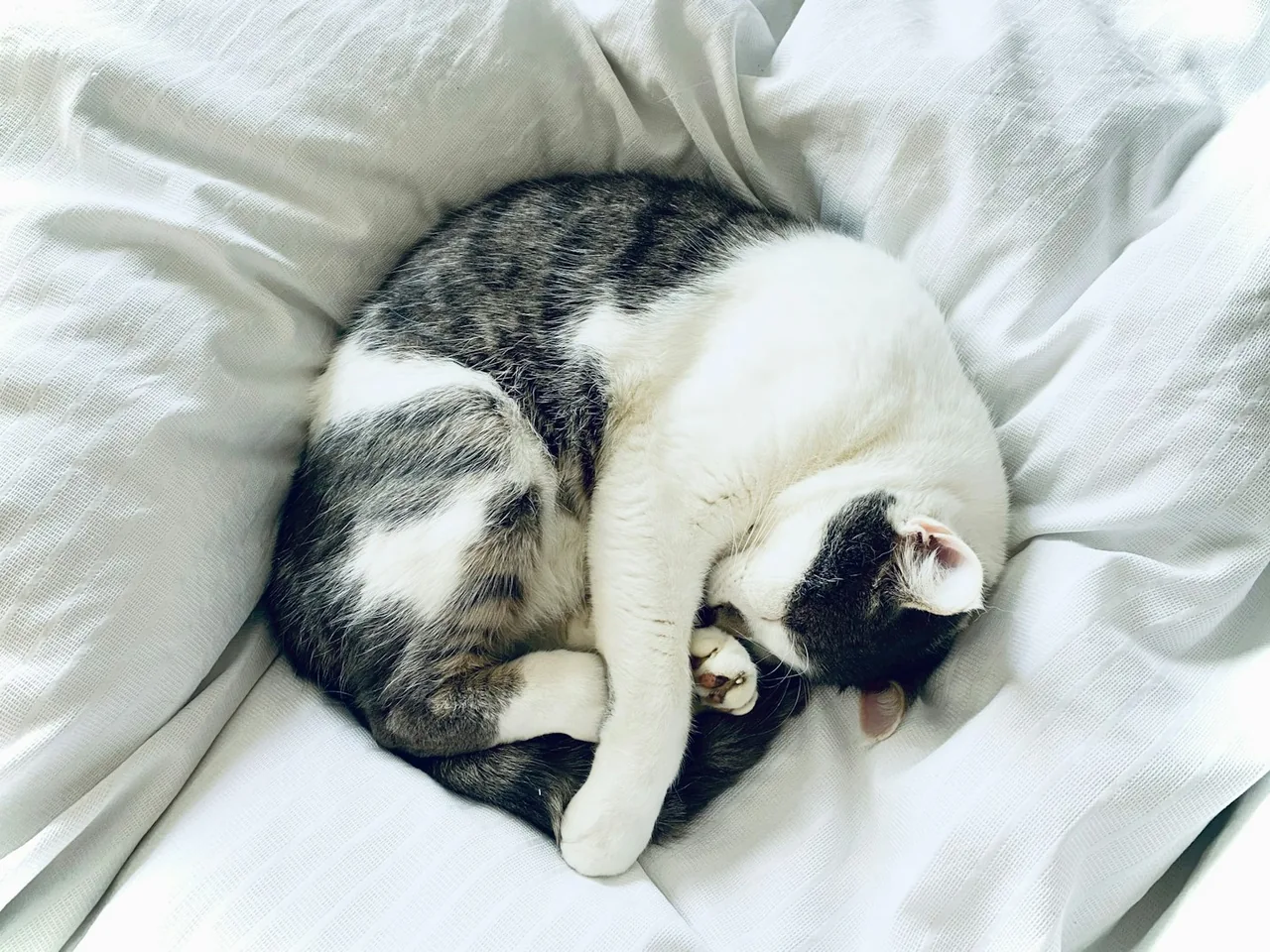
Context photograph.
Count quiet company as company
Your cat does not have to sit on your lap for shared time to matter to you. Plan an ordinary activity in a room where the cat has access to its own resting and hiding choices. Read, work or fold laundry without arranging the animal into the scene.
A hiding place can be part of using the room, not evidence that the arrangement has failed. Boxes are one possible option when suitable and safe for the individual cat. Position any retreat so it remains accessible and does not need to be moved every time a person walks through.
Prepare a comfortable choice of positions
- Keep the route between resting places and essential resources clear.
- Offer an appropriate hiding choice and let the cat enter or leave freely.
- Avoid putting your chair directly across the only exit from the chosen area.
- Keep an interactive toy available for a separate invitation rather than using hands as play targets.
Notice the conditions, not a score
A useful journal entry records whether the cat chose to remain nearby, moved to another place or initiated contact. Include what the people were doing. A quiet room and a room with visitors may lead to different choices without either becoming a statement about the cat's affection.
If you offer play, let it be a distinct, manageable activity with a clear ending and appropriate toy storage. If you offer touch, pause and pay attention to the cat's next choice. Do not keep increasing the invitation because you want a particular response.
Keep the room flexible
An indoor environment benefits from more than a single “cat spot.” Play, scratching, hiding and watching can be distributed according to the space and animal. Start with one practical improvement and observe use before adding furniture that crowds the route.
This guide does not infer emotional states from a distance or diagnose withdrawal. A sudden change in ordinary behaviour deserves appropriate individual advice rather than a new decorating theory.
Sources & practical application
These principles inform the guide. Household worksheets, examples and sequencing are our editorial application, not reported experiments or endorsements by the source organisations.
Source principle: Indoor life requires opportunities for play, climbing, hiding, scratching and access to essential resources.
Source principle: Boxes can offer an accessible hiding and resting opportunity; allow the cat a choice about using one.
Checked October 16, 2026. How we prepare guides · Report a correction.